Discover Design Notes
About Baumer
EK Baumer is a contemporary sans-serif typeface system structured across three related families: Headline, Uniwidth, and Mono. Together they comprise 24 styles, each family including four weights with corresponding italics. While sharing a common visual foundation, the families are differentiated primarily through spacing and intended use, forming a coherent and adaptable typographic toolkit.
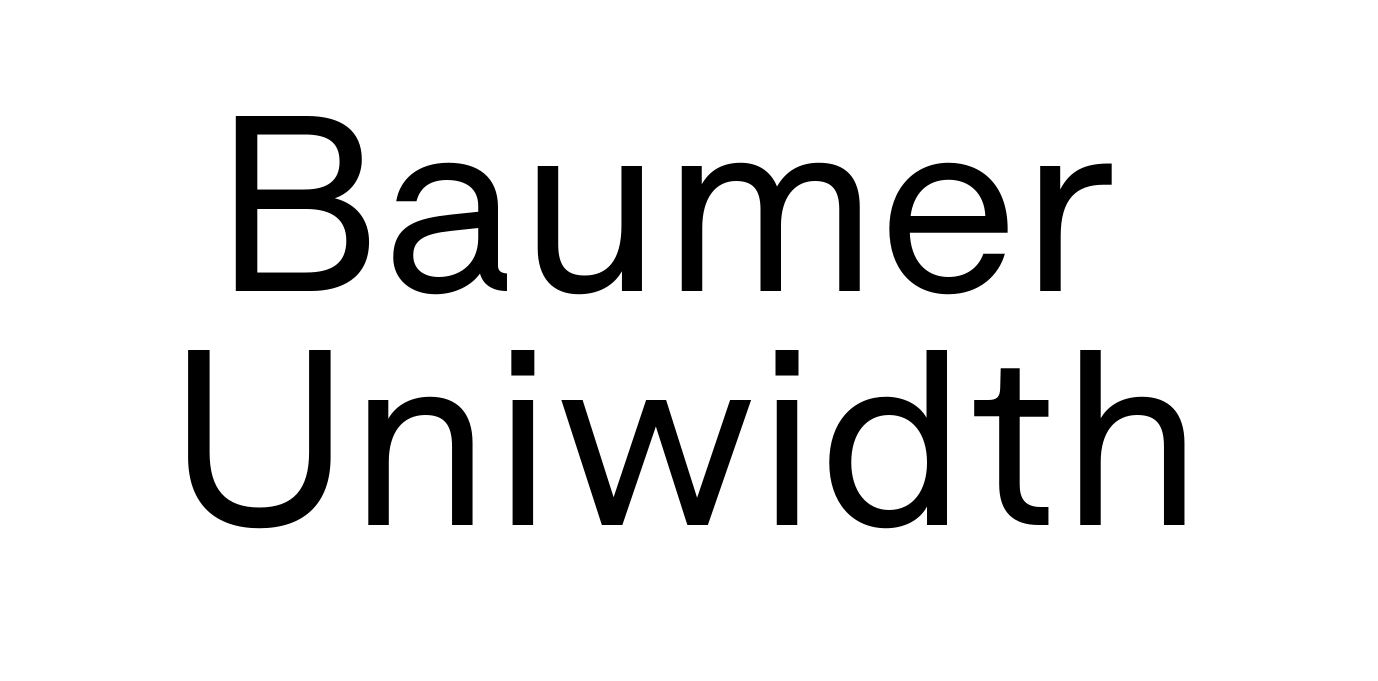
The system is designed to move across a wide range of applications, from editorial and informational settings to operational and display contexts. Headline follows a tight but not touching spacing principle for expressive and large-scale use, while Uniwidth provides a more even rhythm for text and structured information. Mono extends the system into technical and functional environments, supporting coding structures, tabular data, and operational typography.
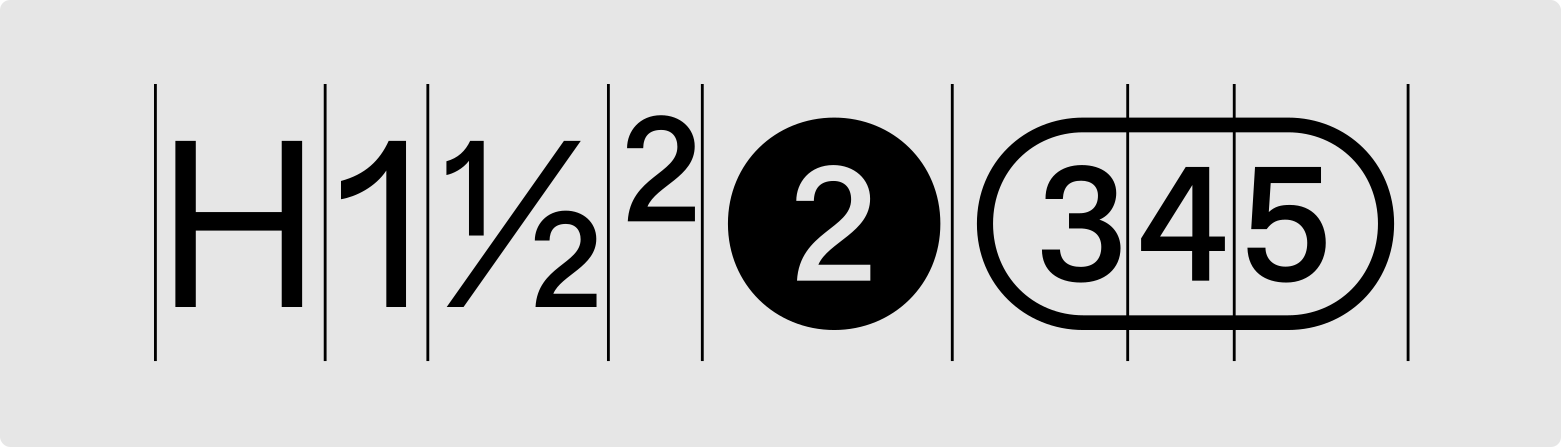
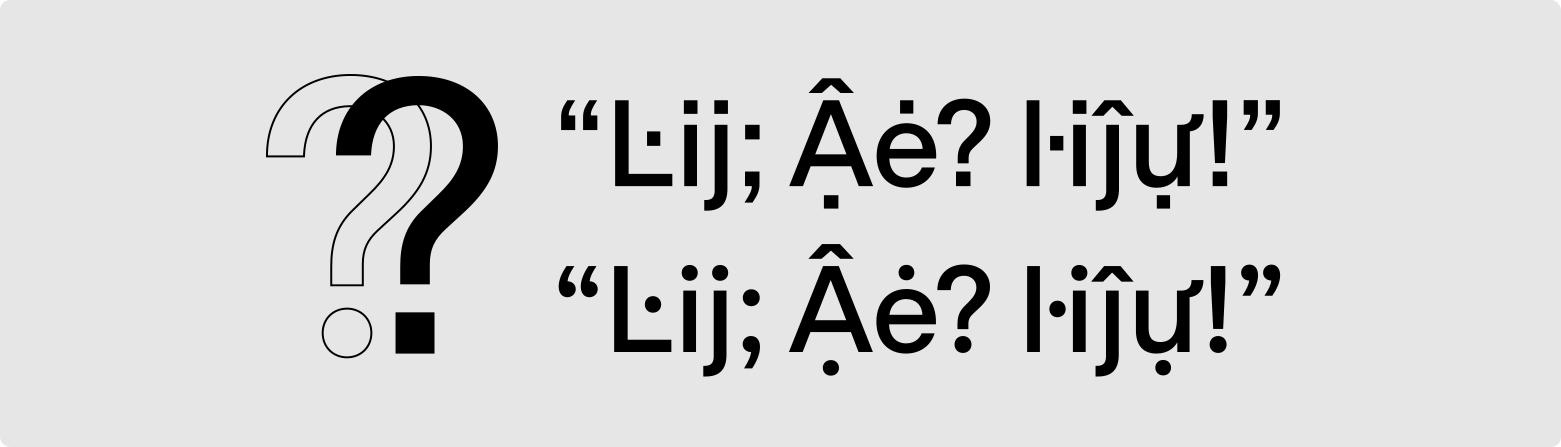
Additional features such as stylistic alternates, biform characters, circled figures, and optical size mapping expand the system’s flexibility while maintaining consistency across scales and media. The result is a disciplined yet versatile typeface system that supports clear hierarchy, controlled variation, and contemporary visual communication.
PDF Specimen
Discover Design Notes
About Baumer
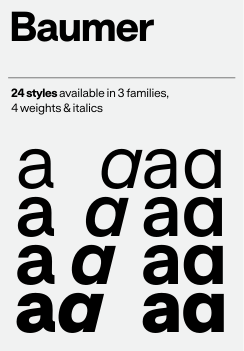
EK Baumer is a contemporary sans-serif typeface system structured across three related families: Headline, Uniwidth, and Mono. Together they comprise 24 styles, each family including four weights with corresponding italics. While sharing a common visual foundation, the families are differentiated primarily through spacing and intended use, forming a coherent and adaptable typographic toolkit.
The system is designed to move across a wide range of applications, from editorial and informational settings to operational and display contexts. Headline follows a tight but not touching spacing principle for expressive and large-scale use, while Uniwidth provides a more even rhythm for text and structured information. Mono extends the system into technical and functional environments, supporting coding structures, tabular data, and operational typography.
Additional features such as stylistic alternates, biform characters, circled figures, and optical size mapping expand the system’s flexibility while maintaining consistency across scales and media. The result is a disciplined yet versatile typeface system that supports clear hierarchy, controlled variation, and contemporary visual communication.
PDF Specimen
